
Description
🤍 White Tea🌿 Silver-Tipped Buds☕ Light Caffeine🌿 Loose Leaf
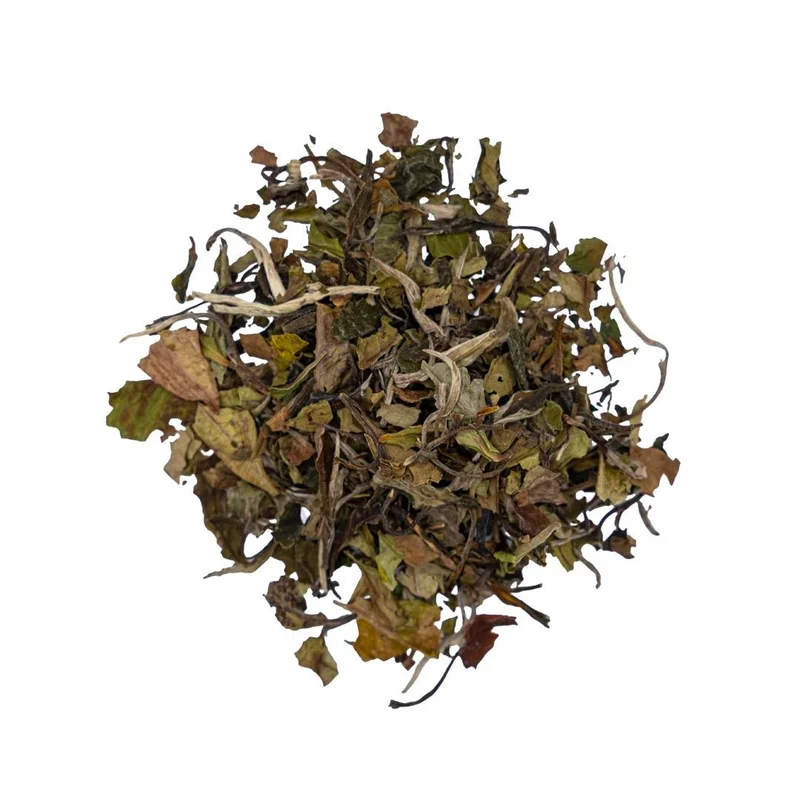
The classic Chinese white tea — silver-tipped buds and young Fujian leaves, gently sweet, lighter than air.
Pai Mu Tan — also written Bai Mu Dan, « white peony » in Mandarin — is one of the great Chinese white teas. Picked in early spring from the same Fujian Province bushes that give us silver needle, but with a different style: one bud and the two youngest leaves harvested together. The leaves are simply withered and dried — no rolling, no oxidation, no firing. The tea is essentially the leaf, lightly preserved.
The brew is the colour of pale straw, the body so light it almost feels like flavoured water on the first sip — then the sweetness arrives. Honey, melon, a hint of dried apricot. Naturally low caffeine, gentle on the stomach, a tea that rewards slow drinking.
🌿
Bud & Leaf
One silver bud, two young leaves — the Bai Mu Dan grade
🤍
Minimally Processed
Withered and dried — no rolling, no firing
✨
Naturally Low Caffeine
Gentle on the cup, gentle on the stomach
✨The Sampson Promise
We only put ingredients in our products that we would use on our own family. Every ingredient has a purpose. If it doesn’t need to be there, it isn’t.
Type
White Tea
Caffeine
Light
Origin
Fujian, China
Format
Loose Leaf
Steep Time
4–5 min
Servings
~25 cups (50g)
Tasting Notes
🍯
Honey-Melon
Aroma
A delicate, slightly floral aroma — ripe melon, light honey, the faintest dried apricot. Very different from green tea’s grassy edge.
✨
Featherlight Body
Body
Almost no astringency, almost no weight. The body comes from the buds rather than the leaf, which is why the cup tastes round despite being so pale.
🍃
Soft Sweet Finish
Aftertaste
The finish is where Bai Mu Dan reveals itself — a slow, lingering sweetness that builds across multiple sips. The Chinese word is « hui gan »: returning sweetness.
How to Brew
01
Measure
One heaped teaspoon (about 2g) per 8oz cup. White tea leaves are large and fluffy — they take more spoon-volume than you’d expect.
02
Heat the Water
80–85°C / 175–185°F. White tea can’t take boiling water — the buds scorch and the cup turns bitter. Bring water to a boil and let it stand a minute.
03
Steep 4–5 Minutes
Longer than green tea, shorter than herbal. The flavour builds gradually — don’t cut the steep short or the cup will taste like warm water.
Water
80–85°C
Time
4–5 min
Per Cup
1 heaped tsp
Bai Mu Dan rewards multiple infusions: re-steep the same leaves two or three times, adding 30 seconds to each round. The second pour is often the sweetest.
About the Tea
🌿
Silver Buds
The Sweetness
Unopened tips covered in a fine silver down — the same buds that make Silver Needle, the most prized white tea. They carry the natural sweetness and the soft, melon-honey aroma.
🍃
Young Leaves
The Body
The two leaves below the bud, picked together with it. They give the cup its very gentle structure — still light, but with enough leaf character to keep the brew from being thin.
✨
Just Withered & Dried
The Process
White tea is the least processed of all teas — leaves are spread on bamboo trays to wither in shade, then dried in low heat. No rolling, no firing, no oxidation steps. The flavour is essentially the fresh leaf, gently preserved.
In the tin
White tea (silver-tipped buds and young leaves).
Origin & Sourcing
Pai Mu Tan from Fujian Province, the south-eastern Chinese region where the Bai Mu Dan style was first developed. Picked in early spring when the buds are still tipped with their characteristic silver down. Small-batch processing, single-origin sourcing for the Sampson shelf.
Reviews
There are no reviews yet.